Vertical farming, hydroponics, and AI climate control are reshaping agriculture with faster growth, cleaner produce, and year-round harvests.
Indoor farming is quickly becoming one of the most exciting changes in modern agriculture. As cities grow larger and farmland becomes harder to access, indoor farming is giving communities a smarter way to produce fresh food all year long. With advanced methods like vertical farming, hydroponics, and AI-based climate systems, indoor farms are creating high-quality crops using less land and water than traditional farming.
According to a DataM Intelligence research report, the global indoor farming market reached USD 34.2 billion in 2022 and is expected to reach USD 56.1 billion by 2031, growing at a CAGR of 6.4% during the forecast period 2024 to 2031. This steady rise shows how indoor farming is moving from a new idea to a strong and fast-growing industry.
Why Indoor Farming Is Growing So Fast
Indoor farming, also known as controlled environment agriculture, allows crops to grow inside greenhouses or indoor facilities where temperature, light, humidity, and water are carefully managed. This controlled setup helps farmers grow produce without depending on weather conditions like drought, storms, or heat waves.
For consumers, indoor farming supports the demand for fresh, pesticide-free produce that is clean, consistent, and available throughout the year. Many indoor farms are located closer to cities, which reduces long transport times and helps stores deliver fresher food faster.
Technology is also a big reason for the market’s growth. Energy-efficient LED lighting, automation, and AI-powered climate control help improve crop yields while lowering resource waste. These innovations make indoor farming more productive and more sustainable.
The Technology Behind Indoor Farming Success
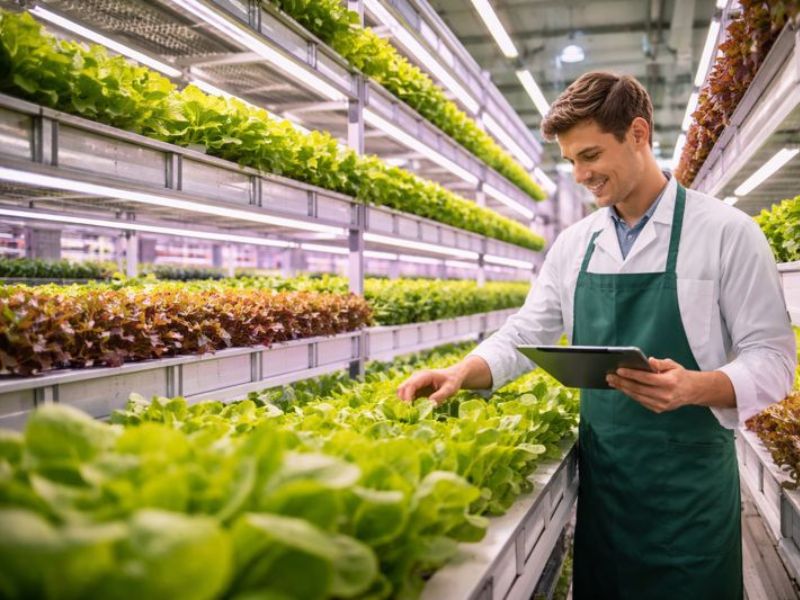
Indoor farming uses different methods depending on the facility and crop type. Vertical farming grows crops in stacked layers, which saves space and produces more food per square foot. Hydroponics uses nutrient-rich water instead of soil, helping plants grow faster with less water use. Some companies also use aeroponics, which sprays nutrients directly onto plant roots for high efficiency.
AI-based systems add another powerful advantage by monitoring plant growth in real time. These systems can adjust lighting, airflow, and moisture levels to keep crops healthy and boost output. This kind of smart farming helps indoor facilities produce consistent harvests with fewer losses.
Top Companies Driving Indoor Farming Forward
The indoor farming market is becoming competitive, with several companies leading innovation and expansion. Key names include AeroFarms, Bright Farms Inc., Bowery Inc., FreshBox Farms, Metropolis Farms Inc., Garden Fresh Farms, Village Farms International Inc., Green Sense Farms LLC, Sky Greens, and Argus Control System Limited.
These companies are helping shape the future of farming by improving productivity and reducing the environmental impact of food production. Their growth is also attracting more partnerships with grocery retailers and food service brands that want a reliable produce supply throughout the year.
AeroFarms is known for research-based growing systems and data-driven cultivation methods that support strong crop consistency. Bowery focuses heavily on automation, software platforms, and real-time control systems that improve efficiency. Bright Farms and Garden Fresh Farms support greenhouse networks near cities, which helps reduce delivery time and keeps produce fresher for shoppers. FreshBox Farms and Metropolis Farms focus on scalable solutions that can be deployed quickly, including in urban and underserved areas. Village Farms International combines greenhouse experience with new innovation, supporting larger-scale production across different climate zones.
Together, these companies are building a strong indoor farming ecosystem where technology, sustainability, and modern consumer needs are all connected.
What the Future Looks Like for Indoor Farming
The future of indoor farming looks promising as more regions deal with limited land availability and changing food demand. Indoor farming can support better local food access, reduce supply chain pressure, and make fresh vegetables more available in areas that need them most.
With better lighting systems, stronger automation, and improved energy efficiency, indoor farming is expected to keep growing as a reliable solution for year-round food production.