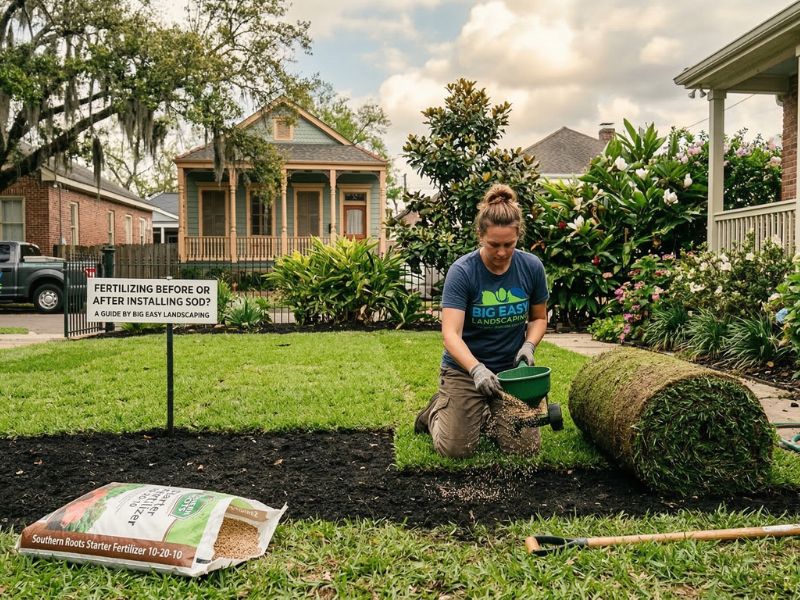
New landscaping insights explain when and how to fertilize sod for stronger roots and long-lasting lawns
New Orleans, Louisiana, 12 March 2026 – A new guide published by Big Easy Landscaping is helping homeowners and property managers better understand one of the most important steps in creating a healthy lawn: fertilizing sod at the right time. The guide explains how proper fertilization, soil preparation, and grass selection can support strong root growth and long-term lawn health during new sod installation.
Titled “Should You Fertilize Before or After Installing Sod,” the guide explores several approaches to fertilization and explains how timing, soil conditions, and grass species influence lawn establishment. With landscaping and lawn care becoming an important part of property maintenance, many homeowners are looking for reliable information about creating durable, green outdoor spaces.
According to the guide, there are three main approaches to fertilizing sod during lawn installation: fertilizing before installation, fertilizing after installation, and using a combination of both methods.
Pre-installation fertilization involves applying nutrients directly to the prepared soil before laying the sod. This method usually includes a phosphorus-rich starter fertilizer that supports early root development. Once the sod is placed on the soil, the roots can immediately absorb nutrients and begin anchoring into the ground. Fertilizers with a nutrient ratio such as 10-20-10 are commonly used because phosphorus plays a key role in helping new grass roots grow.
Post-installation fertilization follows a different timeline. In this method, homeowners typically wait about four to six weeks after the sod is installed before applying fertilizer. This waiting period allows the grassroots to begin establishing themselves in the soil before additional nutrients are introduced. Balanced fertilizers are usually applied during this stage to support overall lawn growth.
The guide also highlights a hybrid approach that combines both strategies. In this method, a light amount of starter fertilizer is applied before installation, followed by additional feeding after the sod begins rooting. Organic topdressing or liquid fertilizers can then be used to provide either slow-release or quick nutrient delivery, depending on the lawn’s condition.
Another important factor discussed in the guide is soil testing. A soil test helps identify the existing nutrient levels in the soil, including nitrogen, phosphorus, potassium, and micronutrients such as iron and magnesium. It also determines the soil’s pH level, which plays a major role in plant health.
Most grass species grow best in soil with a pH level between 6.0 and 7.0. If soil falls outside this range, adjustments may be required before installing sod. For example, lime may be used to increase soil pH, while sulfur can help lower it. Understanding soil chemistry helps ensure that the lawn receives the nutrients it needs for healthy growth.
Soil texture is another key factor affecting fertilization. Sandy soils tend to drain water and nutrients quickly, which may require more frequent fertilization. Clay-heavy soils, on the other hand, retain moisture but may limit airflow around the roots. To improve soil structure, the guide recommends adding two to three inches of organic compost to clay-based soils before laying sod.
The guide also compares four major fertilizer types commonly used during sod installation. Starter fertilizers with high phosphorus levels are often the preferred choice for new lawns because they support root development. Slow-release granular fertilizers provide nutrients gradually, reducing the risk of chemical burn while maintaining steady lawn growth.
Liquid fertilizers offer fast nutrient absorption and can help correct visible nutrient deficiencies quickly, though they must be applied carefully to prevent runoff. Organic fertilizers, such as compost-based or manure-based options, improve soil health and encourage microbial activity. While they contain lower nutrient concentrations, they can contribute to long-term soil quality when applied regularly.
Grass species also play an important role in determining the best fertilization schedule. Warm-season grasses, such as St. Augustine grass, grow most actively between late spring and early fall and respond well to fertilization during this period. Cool-season grasses like ryegrass perform better with early spring fertilization. Sod suppliers often provide species-specific recommendations to help property owners maintain healthy lawns.
In addition to lawn installation, landscaping companies often offer a wide range of outdoor construction and landscape improvement services. These may include patios, pergolas, outdoor kitchens, walkways, water features, drainage systems, landscape lighting, and garden structures designed to enhance outdoor living spaces.
As interest in landscaping design and lawn care continues to grow, guides like this provide practical information for property owners planning new lawn installations. Understanding soil conditions, selecting the right fertilizer type, and timing applications properly can make a significant difference in the success of a sod installation.