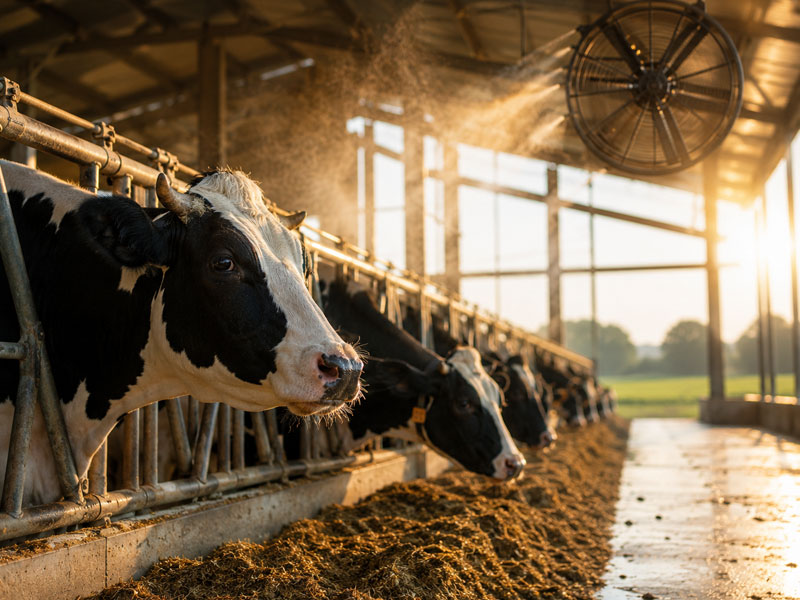
New research shows heat stress is reducing dairy quality and creating new challenges for farmers and food manufacturers
Ithaca, New York, 24 June 2026 – The dairy industry has long understood that hot weather can reduce milk production. However, new research from Cornell University reveals that rising temperatures are doing more than lowering milk volumes. Heat stress is also reducing the fat and protein content in milk, affecting the quality and value of dairy products across the supply chain.
The study analyzed production data from approximately 6.5 million dairy cows across 43 U.S. states over a ten-year period. Researchers found that while milk output declines during periods of high heat and humidity, the quality of milk begins to deteriorate even earlier. Fat and protein levels start falling at lower temperature thresholds, meaning dairy producers may experience quality losses long before production volumes are noticeably affected.
For dairy farmers, this creates a significant economic challenge. In many markets, milk is valued not only by volume but also by its fat and protein content. According to the research, a 10-point increase in the temperature-humidity index can reduce milk yield by 1.2 percent, while annual revenue may decline by as much as 2.8 percent due to lower milk quality. Researchers estimate that the combined impact could cost the U.S. dairy industry around US$1.65 billion annually.
The findings also raise concerns for dairy processors and ingredient manufacturers. Products such as cheese, yogurt, butter, whey protein, and nutritional ingredients depend heavily on consistent milk composition. Lower levels of milk solids can affect product yields, manufacturing efficiency, texture, and nutritional performance, creating additional challenges for food companies that rely on stable dairy inputs.
Researchers found little evidence that dairy cows are naturally becoming more resilient to rising temperatures. The response to heat stress was similar across different ages, farm sizes, and geographic regions. As a result, dairy operations may need to invest further in cooling technologies, precision livestock management, nutrition programs, and breeding strategies designed to improve resilience and maintain productivity.
The study highlights a growing issue for global food production. As weather patterns become increasingly unpredictable, maintaining both the quantity and quality of agricultural products will become essential for long-term food security and supply chain stability. For the dairy industry, adapting to heat stress is no longer just about protecting milk output. It is about preserving the nutritional and economic value of every liter produced.