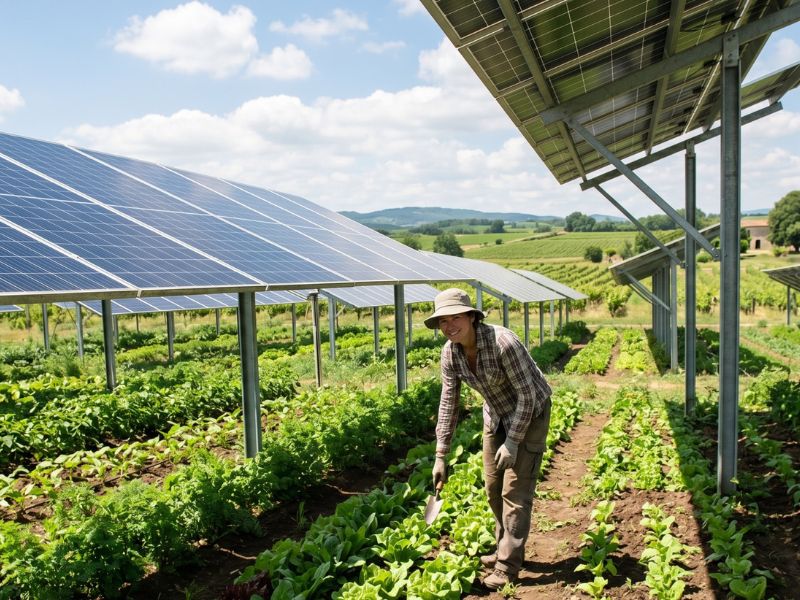
Solar-powered agriculture market expected to witness major global growth as clean energy and food production combine
London, United Kingdom, 13 May 2026 – The global agriculture industry is entering a new phase of innovation as agrivoltaics gains attention as a smart solution for both clean energy generation and sustainable farming. According to recent market insights, the global agrivoltaics market is projected to reach nearly US$9.15 billion by 2033, reflecting growing interest in combining solar energy systems with agricultural land use.
Agrivoltaics is a farming approach where solar panels are installed above crops or agricultural land, allowing farmers to generate renewable energy while continuing food production. This dual use of land is becoming increasingly important as countries face rising energy demand, climate change concerns, and pressure on agricultural resources.
The technology offers several advantages for farmers and energy producers. Solar panels can help reduce water evaporation, protect crops from extreme heat, and create additional income opportunities through electricity generation. At the same time, renewable energy companies benefit from better land utilization and improved sustainability practices.
Many governments and private organizations are now investing in solar-powered agriculture projects to support clean energy goals and improve rural economic development. Experts believe agrivoltaics could play a major role in future smart farming systems, especially in regions dealing with land shortages and unpredictable weather conditions.
The increasing adoption of renewable energy technologies, along with advancements in solar infrastructure and precision farming, is accelerating market growth. Countries across Europe, the Asia Pacific, and North America are actively exploring agrivoltaic installations as part of broader sustainability strategies.
Industry analysts say the combination of agriculture and solar power represents a practical solution for balancing food security with environmental responsibility. As climate challenges continue affecting global farming operations, integrated systems like agrivoltaics are expected to become more common in the coming years.
The rising market forecast also highlights how innovation in clean technology is reshaping traditional farming methods and creating new opportunities for sustainable economic growth worldwide.