Precision watering technology helps improve crop health while saving valuable water resources
Des Moines, United States, 14 April 2026 – As water scarcity becomes a growing concern across the world, farmers are turning to smarter solutions to protect crops and conserve resources. One such solution gaining rapid attention is drip irrigation, a modern farming technique that delivers water directly to plant roots with precision.
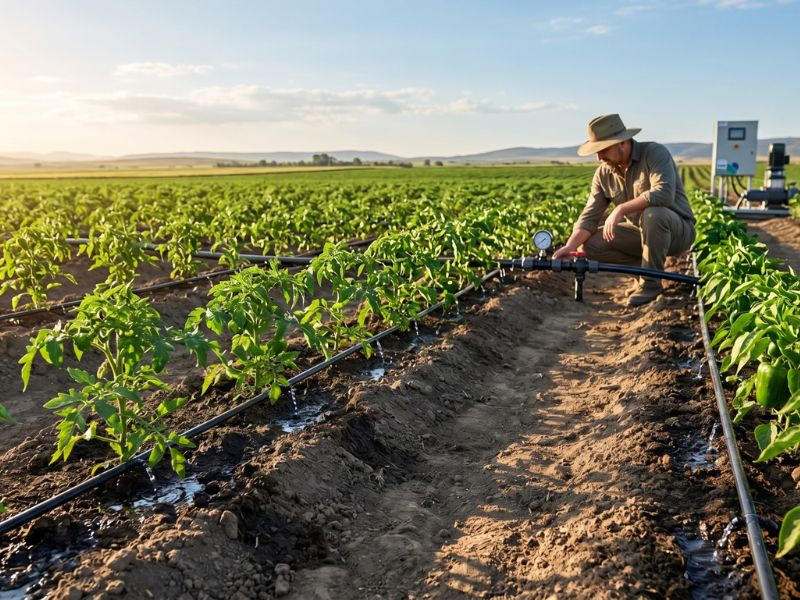
Unlike traditional irrigation methods that flood fields or spray water over crops, drip irrigation works slowly and efficiently. Water is released drop by drop near the root zone, ensuring that plants receive exactly what they need without waste. This targeted approach is helping farmers improve crop health while using significantly less water.
One of the biggest advantages of drip irrigation is water conservation. This method can reduce water usage by a large margin compared to conventional systems, mainly by minimizing evaporation and runoff. This makes it especially useful in regions facing drought or limited water supply.
In addition to saving water, drip irrigation also plays a key role in improving crop health. Because water is delivered directly to the roots, plants maintain consistent moisture levels, reducing stress and supporting better growth. This leads to healthier crops, more uniform development, and higher yields.
Another important benefit is reduced risk of disease. Traditional irrigation often wets leaves and stems, creating conditions for fungal infections. Drip systems avoid this by keeping foliage dry, making crops less vulnerable to diseases and pests.
Drip irrigation also allows for precise nutrient management. Farmers can deliver fertilizers directly through the irrigation system, ensuring that nutrients reach the roots efficiently. This not only improves plant growth but also reduces fertilizer waste and environmental impact.
Beyond crop health, the system supports overall farm efficiency. It reduces weed growth since water is only applied near the plant roots, and it lowers labor requirements compared to traditional irrigation methods.
With the rise of sustainable agriculture, drip irrigation is becoming a key technology in modern farming. Trends such as smart irrigation systems, precision agriculture, water-efficient farming, climate-resilient agriculture, and sustainable crop management are driving its adoption worldwide.
As farmers look for ways to grow more with fewer resources, drip irrigation offers a practical and effective solution. By combining efficiency, sustainability, and improved crop performance, this technology is helping shape the future of agriculture in a water-conscious world.