How microirrigation systems, automation, and data are reshaping agriculture for
a sustainable future
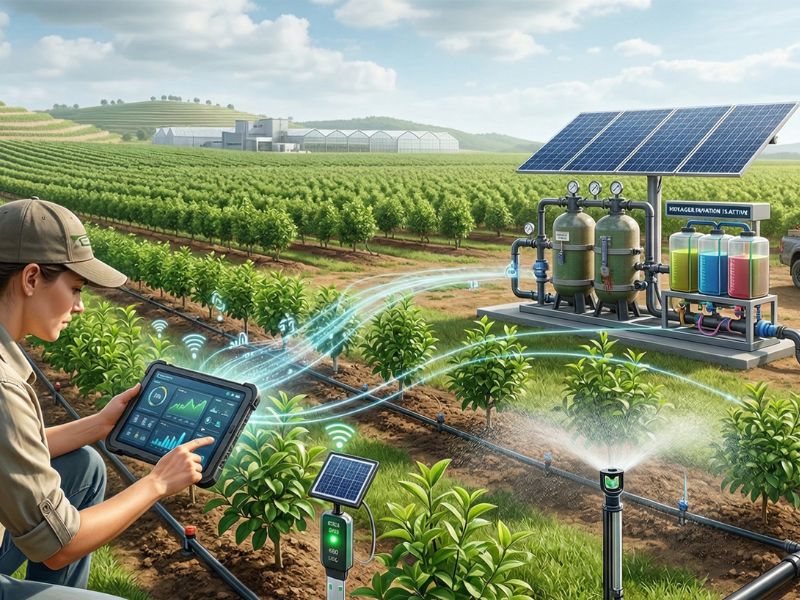
New York, United States, 25 March 2026 – Farming is changing rapidly, and one of the biggest drivers of this shift is smart irrigation. Microirrigation systems are becoming more advanced, helping farmers use water more efficiently while improving crop quality and yields. With the integration of automation, sensors, and digital tools, irrigation is no longer just a routine task it is now a precise and data-driven process.
Modern microirrigation systems allow farmers to control when and how much water is
delivered to crops. Through automated scheduling and real-time monitoring, these systems
ensure consistent water distribution. This reduces water waste, lowers energy use, and
minimizes the need for manual labor. For farmers, this means better efficiency and lower
operational costs.
Technology is playing a key role in this transformation. Sensors placed in the soil and fields can measure moisture levels, weather conditions, and evaporation rates. This data is then analyzed to guide irrigation decisions. Instead of guessing, farmers can now respond to real-time conditions, improving crop health and ensuring stable yields even in challenging climates.
Another important development is the use of fertigation, where nutrients are delivered along with water. This method improves how fertilizers are absorbed by plants and reduces harmful runoff into the environment. Combined with cloud-based platforms, mobile apps, and IoT-enabled systems, farmers can monitor and control irrigation remotely. These tools provide alerts, performance insights, and easy management, making advanced irrigation more accessible than ever.
Among different types of systems, micro sprinklers are emerging as a fast-growing segment. These systems provide uniform water coverage and can be adjusted to target specific plants or areas. They operate at lower pressure compared to traditional sprinklers, which reduces energy consumption and operating costs. Micro sprinklers are especially useful for orchards, vineyards, and nurseries, where precise and wide coverage is needed.
The industrial segment is also driving strong growth in the microirrigation market. Large
agribusinesses, plantations, and commercial growers are increasingly adopting these systems to meet sustainability goals and improve efficiency. With remote monitoring and automated controls, companies can manage large-scale operations more effectively while reducing water usage and environmental impact.
Asia Pacific is expected to be the fastest-growing region in this market. Countries in this region are facing challenges such as irregular rainfall, droughts, and rising temperatures.
Microirrigation systems help address these issues by delivering water directly to plant roots in controlled amounts. This reduces water stress on crops and improves their ability to survive extreme weather conditions.
In addition, these systems can include filtration units that remove impurities from irrigation
water. This ensures better soil health and protects crops from damage caused by poor water quality. As a result, farmers can achieve higher yields and maintain long-term productivity.
Leading companies in the microirrigation market include Jain Irrigation Systems, The Toro
Company, Netafim, Rain Bird Corporation, Finolex Plasson, Mahindra EPC Irrigation, Rivulis,
Hunter Industries, and Irritec. These players are continuously investing in innovation to make irrigation smarter, more efficient, and more sustainable.
As water scarcity and climate change continue to impact agriculture, the demand for advanced irrigation solutions is expected to rise. Microirrigation systems offer a practical way to balance productivity with sustainability, making them a key part of the future of farming.